The Election Commission of India clarified that claims, objections, and corrections to the draft electoral roll in Bihar's special intensive revision exercise can be filed beyond September 1, but will be considered after the roll is finalized. The Supreme Court directed assistance for voters and parties in filing claims.

The application claimed that since the inception of the SIR process in the state, the EC has issued instructions to officers at the ground level through "informal and extra-statutory channels", such as WhatsApp messages and oral directions conveyed during video conferences, instead of issuing formal written instructions.
The Election Commission has assured the Supreme Court that no voter's name will be deleted from the draft electoral roll in Bihar without prior notice and a fair hearing. The EC also clarified that it is not required to share separate lists of those not included in the draft rolls.
The Election Commission has defended its Special Intensive Revision of electoral rolls in West Bengal and Tamil Nadu in the Supreme Court, refuting allegations of mass deletion of genuine voters as exaggerated and politically motivated.
The Election Commission defended its Special Intensive Revision (SIR) exercise for Bihar's voter list in the Supreme Court, calling it accurate and dismissing allegations of impropriety by political parties and NGOs.
The Supreme Court has directed the Election Commission to include Aadhaar as a valid document for voter identification in Bihar's special intensive revision of electoral rolls, clarifying it is not proof of citizenship.

The Supreme Court has directed the Bihar State Legal Service Authority to assist voters excluded from the final electoral rolls in filing appeals with the Election Commission.

The Supreme Court has directed the Election Commission to provide details regarding the approximately 65 lakh voters removed from the draft electoral rolls in Bihar, a state preparing for elections. The court's order comes in response to a petition filed by an NGO challenging the Election Commission's Special Intensive Revision of electoral rolls.

The Supreme Court is examining the validity of the Election Commission's decision to conduct special intensive revisions of electoral rolls in several states, focusing on concerns about democratic participation and the burden on ordinary voters.
The Election Commission suspended four officers and a casual worker in West Bengal for alleged dereliction of duty and lapses in preparing electoral rolls. The action follows allegations of electoral roll compromise at the behest of the ruling Trinamool Congress.
Sex workers in Sonagachi, Asia's largest red-light district, are pleading for relief from stringent voter ID rules that they say are impossible to meet, potentially leading to exclusion from the voters' list.

The Supreme Court has directed the Election Commission to provide details regarding the 3.66 lakh voters excluded from Bihar's final electoral roll after a Special Intensive Revision (SIR) exercise. The court's direction came after concerns were raised by petitioners about the lack of notice or reasons given to the excluded voters.

Protests erupted across several districts of West Bengal over alleged harassment of people in the ongoing Special Intensive Revision (SIR) exercise, leading to road blockages and tyre burning. Demonstrations were held in South 24 Parganas, North 24 Parganas, Jhargram, and Purba Medinipur.
A new study alleges that Muslim voters are disproportionately represented in Logical Discrepancy (LD) lists during Kolkata's voter roll revision, raising concerns about potential bias in the electoral process.
'Even today illegal foreign immigrants live in Assam and their names might be on the voters list. This we can get rid of only by doing SIR.'

Underscoring the 'presumption of genuineness' of Aadhaar and voter ID, the Supreme Court on Monday refused to stay the publication of draft electoral rolls in poll-bound Bihar and said it would once and for all decide pleas against Election Commission's special intensive revision (SIR) of electoral rolls.
Election Commission officials defend the intensive revision of Bihar's voters' list as 'inclusive' amid criticism from opposition parties, who claim it will disenfranchise voters. The Supreme Court is set to hear petitions challenging the revision.

A bench of Justices Surya Kant and Joymalya Bagchi is likely to take up the matter in which the EC has justified its ongoing SIR of electoral rolls in Bihar, saying it adds to the purity of the election by "weeding out ineligible persons" from the electoral rolls.

A BJP government in Bengal inherits more problems than it might care to admit at its moment of triumph, points out Ramesh Menon
The Supreme Court has agreed to hear petitions challenging the Election Commission's decision to revise electoral rolls in Bihar. The hearing is scheduled for July 10.
The Supreme Court has begun hearing petitions challenging the Election Commission's decision to conduct a special intensive revision exercise in Bihar ahead of elections, raising concerns about voter exclusion.
A bench of Justices Sudhanshu Dhulia and Joymalya Bagchi, however, questioned the timing of the exercise, besides offering its prima facie view that Aadhaar card, voter ID card and ration cards could be considered during the SIR in Bihar.

In her third letter to Kumar since the SIR began, Banerjee accused the Election Commission of political bias, insensitivity, and high-handedness during the exercise.
Kerala Chief Minister Pinarayi Vijayan questioned the attempts being made to implement the SIR in poll-bound Kerala, Tamil Nadu and West Bengal while the Constitutional validity of the Bihar SIR process is under consideration by the Supreme Court.

'Today, the State looks at everyone with suspicion.'
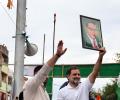
'The EC should not have let the initiative go into the hands of the political leadership. By allowing this to happen, they have opened a Pandora's box.'

The Registrar General and Census Commissioner of India, Mritunjay Kumar Narayan, has reassured the public that individual data collected during the upcoming census will remain confidential and cannot be used for any purpose other than statistical aggregation.

'I don't want to be called a new Indian voter when I am an old Indian voter.'
'The protection of secrecy and anonymity gets lost with this linking.'
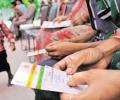
Expressing surprise over political parties not coming forward in filing objections related to 65 lakh excluded voters, the top court directed the chief electoral officer of Bihar to implead them in the court proceedings.

A section of BLOs in West Bengal protested excessive workload during the SIR process, leading to clashes with BJP supporters outside the CEO's office. The protest highlights concerns over the enumeration exercise and accusations of political interference.

Outgoing Chief Election Commissioner Rajiv Kumar has expressed concerns about long-pending cases questioning electoral processes, arguing they fuel distrust and should be scheduled with consideration for election periods. He also advocated for enhanced transparency in political promises, with clear disclosures on financial viability and impact on state finances. Kumar further stressed the need for a totaliser system to maintain polling station-wise voting confidentiality and urged the empowerment of NRIs to vote remotely. He highlighted the potential of biometric authentication and technology to address issues like impersonation and multiple voting.

The CEC said the chief electoral officer of Assam will give a factual report in the coming week on various aspects arising out of the publication of the final draft NRC.
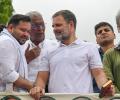
'The long term strategy is that this government wants to create a second class citizen list.'

The likes of Sengottaiyan can help Vijay navigate it better and faster -- but not necessarily to his goal, which is farther, and can move towards or away from him as well in the weeks and months to come, points out N Sathiya Moorthy.
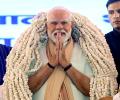
As it gains commercial viability, the food will likely become a powerful political currency.
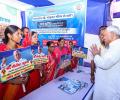
For nearly two decades, Nitish Kumar has cultivated women as a distinct constituency. 'To create a broader vote base, he thought it would be better to bring women to electoral politics.'
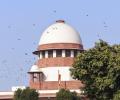
"The open-ended nature of Section 6A has, with the passage time, become more prone to abuse due to the advent of forged documents to establish, inter-alia (among other things), wrong date of entry into Assam, inaccurate lineage, falsified government records created by corrupt officials, dishonest corroboration of the date of entry by other relatives so as to aid illegal immigrants who are otherwise not eligible under Section 6A by virtue of having entered into Assam after March 24,1971," he noted in a separate 127-page dissenting judgment.

There is no guarantee that if we speak in only Indian languages, all our faults will be washed away and India will shine. Why then do they bully and belittle the English-speaking? asks Shyam G Menon.

'Most Assamese don't understand a word like ghuspethiya and its insulting connotation.'
